
28 Years Later
memento mori - 4.3 stars

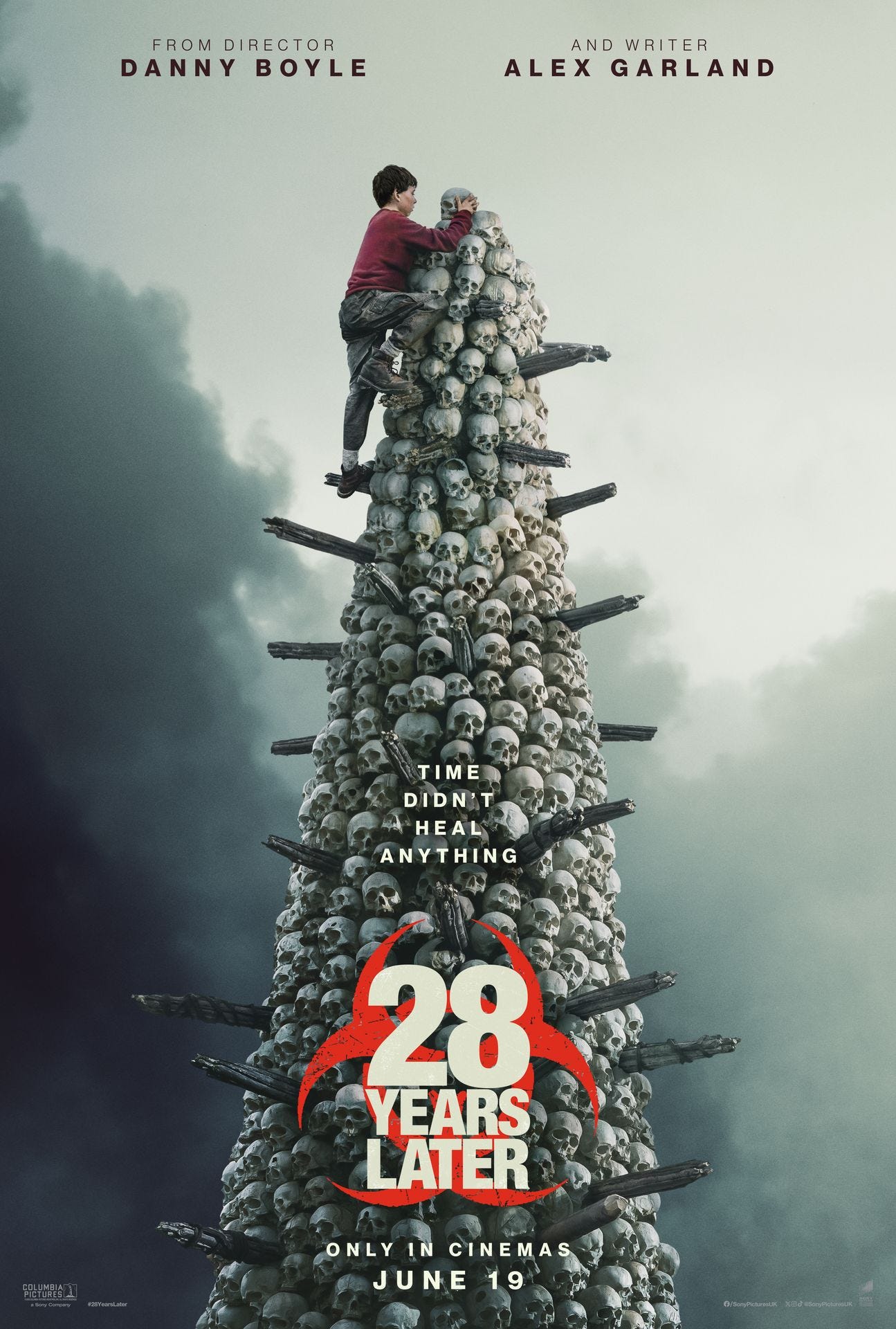
Danny Boyle has returned to his rage virus-filled Britain with the third instalment of the 28 zombies movies. Set 28 years after the outbreak, Britain has been quarantined and isolated by the rest of the world. Any remaining inhabitants are left to their own devices to survive.
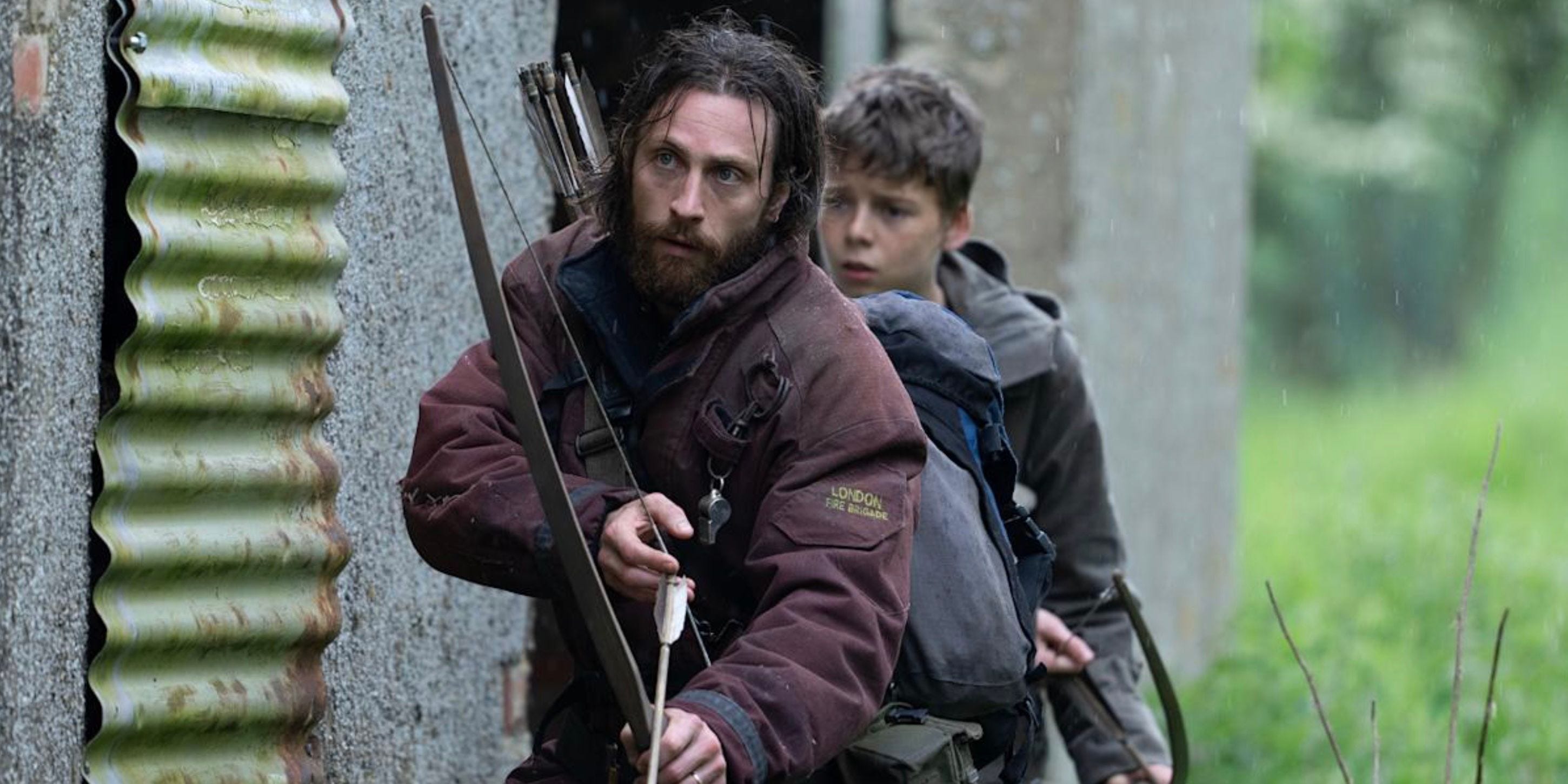
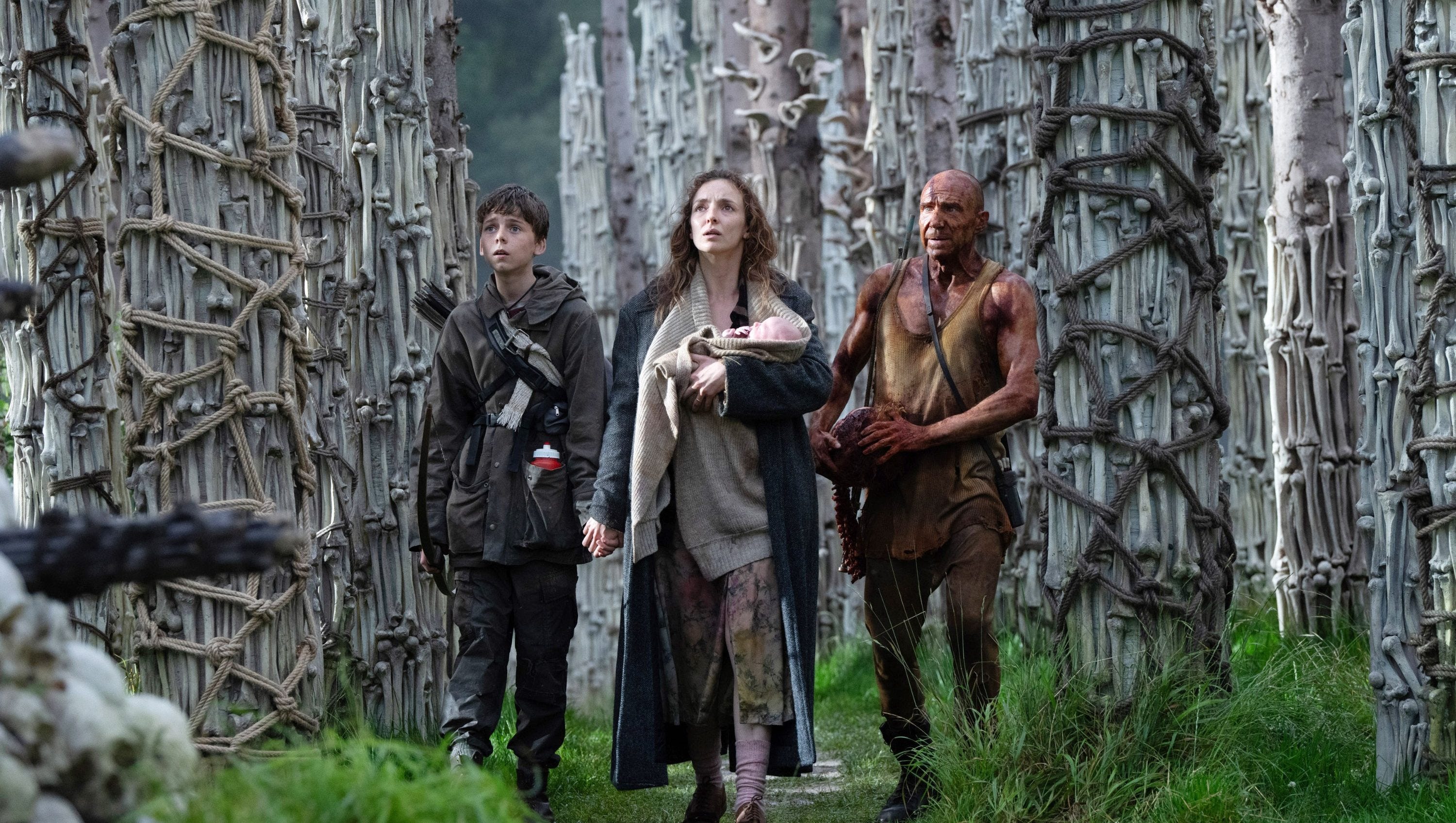
28 years after the outbreak, nature has reclaimed the land. The small populations still living in Britain have resorted to life without electricity, technology or any of the comforts of the 21st century. One such example is a small village on the island of Lindisfarne, protected from the infected by a tidal causeway that limits access in and out. On this island, we meet young Spike (Alfie Williams), a 12-year-old boy who is taken to the infected mainland by his father (Aaron Taylor-Johnson) to make a man out of him. Spike’s experience on the mainland leads him to learn a great deal about the outside world as well as his family, and he discovers a potential solution to help his ailing mother (Jodie Comer).
While there is an oversaturation of zombie stories out there, think of the long and dragged-out Walking Dead TV series or the more recent and spectacular The Last of Us series, on top of many films from the last 40 years, 28 Years Later still hits home in many ways. Firstly, it is set in the UK is an anomaly compared to most of the US-based zombie tales, but it also has a very British touch, which helps enliven the genre.
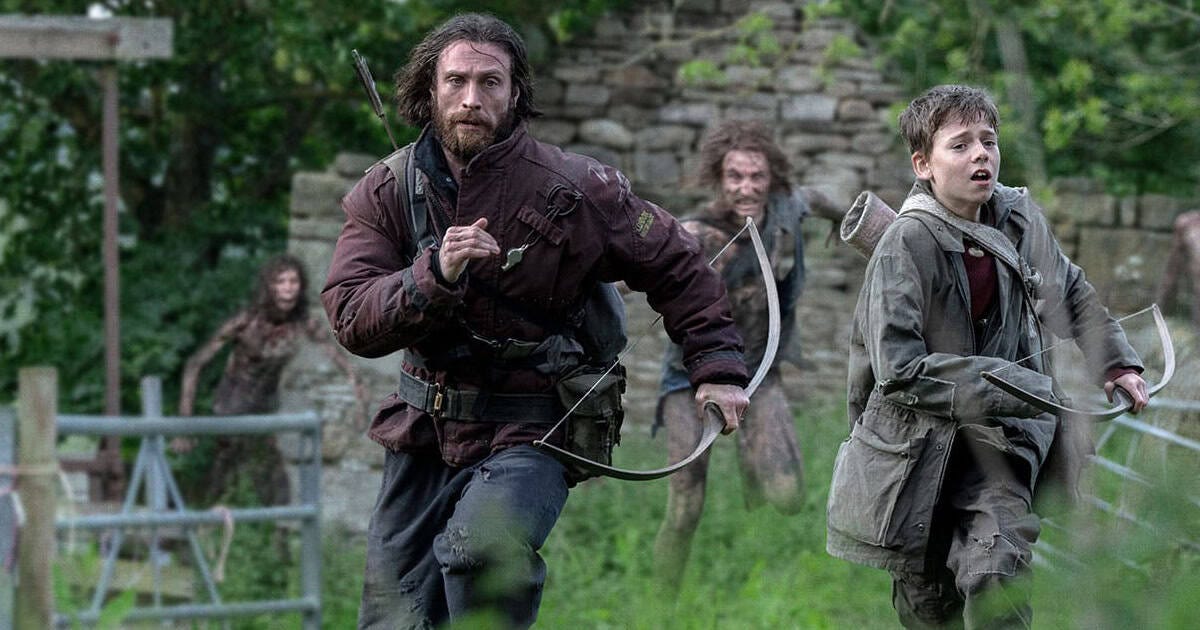
There are new developments with the infected after so much time. They are no longer just fast-running monsters. Some have grown fat and slow, crawling instead of walking. There is also the addition of Alphas, who are taller, slightly more sentient and much harder to kill. Of course, after 28 years, most of the infected are run down, their clothes hanging in tatters, caked in filth. Amongst decrepit houses and beautiful night skies, the Britain of 28 Years Later is haunting as it is beautiful.
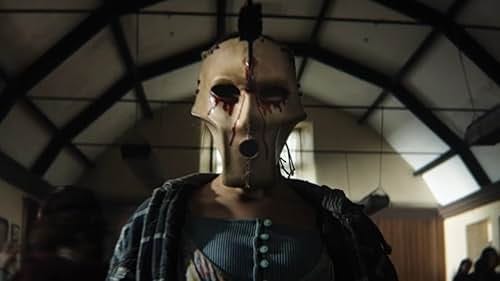
What I found particularly interesting was how much life has changed for the uninfected. On Lindisfarne, the villagers seem, on the surface, to be a close-knit, supportive community. There is a school, established work roles, basic workshops for simple industry, parties, alcohol, essentially, a structured society. But there are subtle signs that things are not as they seem. We catch glimpses suggesting the village is more sinister than it appears. In quick flashes, we see unnerving masks, and Boyle uses grainy old footage to keep us on edge. What’s clever is that this isn’t explained. It leaves us with more questions than answers.
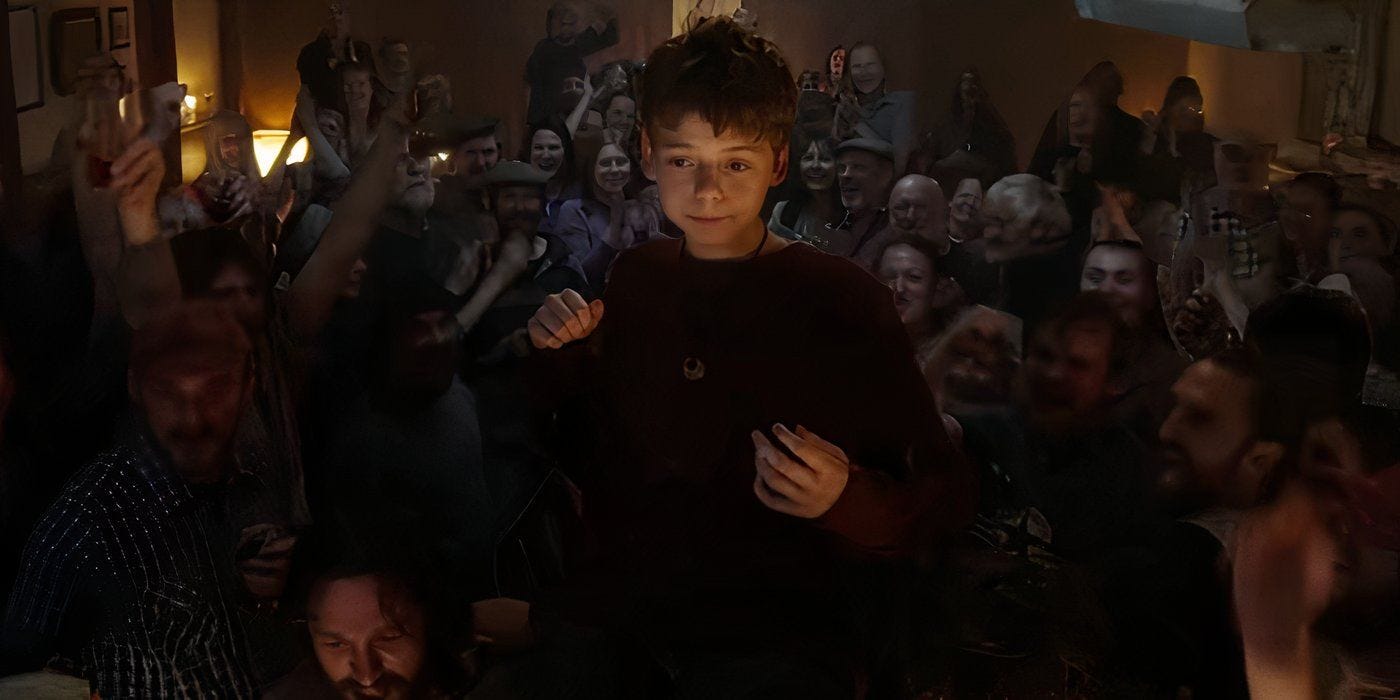
In one scene, the villagers celebrate Spike’s return from the mainland. The party begins like a quaint Sunday afternoon tea at a local community centre, with middle-aged women bringing in tea cake and setting up bunting. But it then devolves into a drunken soirée and eventually which doesn’t feel right. It feels like it is leading up to an orgy. And this is all because a 12-year-old boy has become a man by getting his first kill. The villagers’ energy reminded me of Quint from Jaws. There is a level of unhinged delusion in their faces, but this is only teased occasionally throughout the film. After finishing the film, I wanted to know more about the village. What lies behind the curtain? This is why I eagerly await the next instalment.
One of the strongest pillars of 28 Years Later is its cast. Alfie Williams gives a great performance as a young actor still developing his craft. He is a captivating lead, full of innocence, fear and wonder. I was especially impressed by his ability to convey pain and suffering without over-egging it. Ultimately, 28 Years Later is a coming-of-age story. We see Spike grow in a myriad of ways. Although still very young, he learns there is a much bigger world beyond his village, but he also discovers how dangerous that world can be. He becomes more skilled in dealing with the infected, but what he truly learns is that death is inevitable and life is precious, whether short or long, peaceful or painful. This is a delicate subject to put on screen, and at the heart of it is a young actor who plays his role exceptionally well. Child actors are notoriously terrible, and this film would’ve collapsed into mediocrity if Williams’ performance were subpar. On a side note, young actors like Williams, as well as Owen Cooper from the powerful Netflix series Adolescence, are the next generation of great actors who have proven themselves more than capable of taking on challenging roles. They are only going to get better, and I can’t wait to see them and their careers flourish.
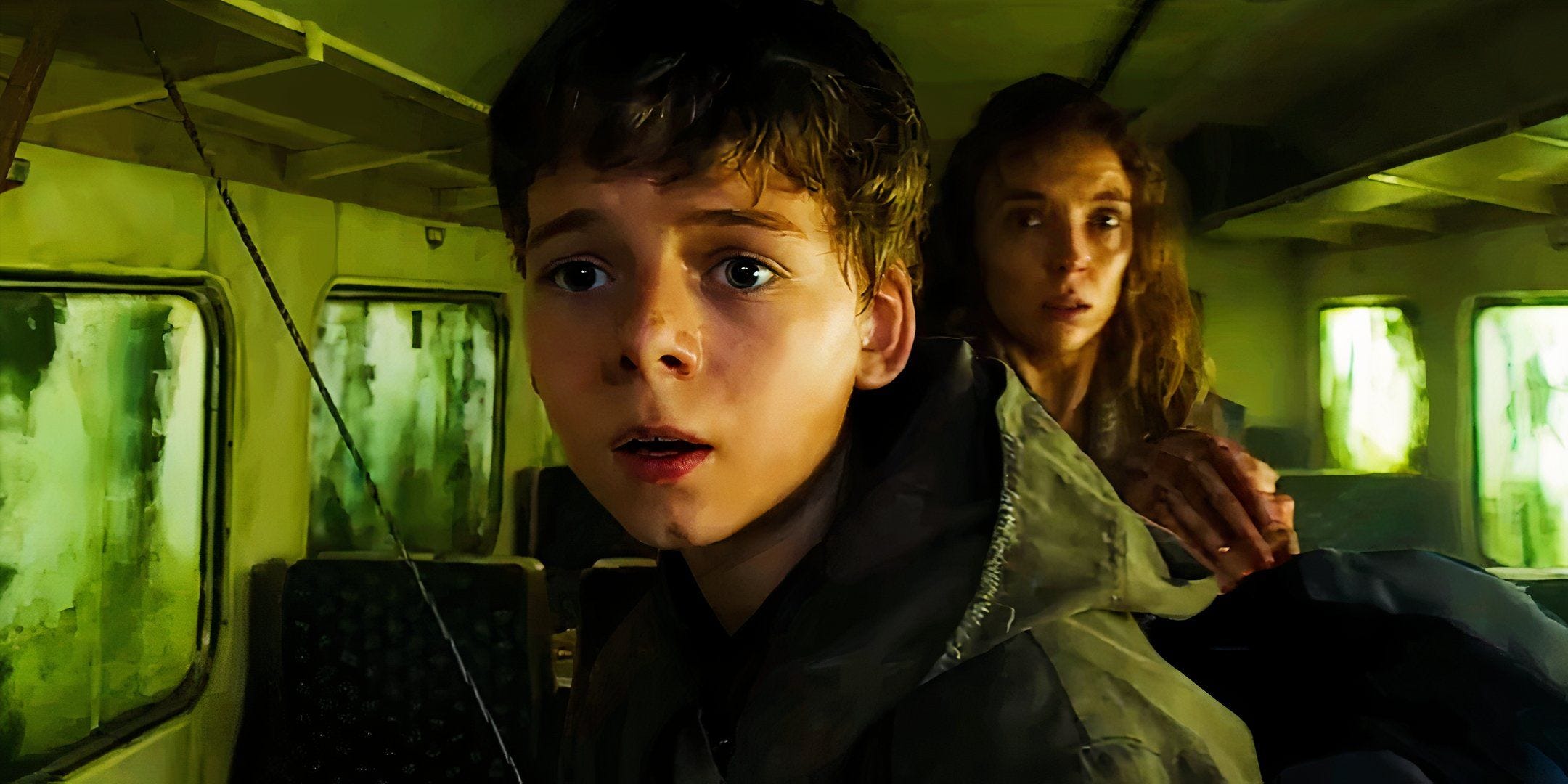
Aaron Taylor-Johnson, as Spike’s father Jamie, brings great duality to the character. He is a caring, calm parent who encourages his son even under immense pressure, ie, being chased by a flock of infected, but also a man who lies, cheats and is abusive. Like the village, Jamie first appears kind and supportive, but red flags start to emerge. He seems like a good man twisted by the horrors around him. There is a rage within him, sparked by the senseless killing of infected humans he no longer sees as people. Jamie, like the village, has disassociated from reality, even if everything seems fine on the surface. His brutalised and tormented persona contrasts well with Spike’s innocence and natural purity.
Jodie Comer and Ralph Fiennes are also excellent additions, adding texture to this damaged world. Comer, as the mother figure, is well juxtaposed with Jamie. In her first scene, there’s a hint that she may be infected due to her sudden, painful aggression. She is initially prickly, but as the story unfolds, despite her mental struggles, we see moments of immense tenderness, a mother’s love and her instinct to protect her son, whether he realises it or not. Along with Fiennes, Comer are utterly safe bets to bring the best out of any character or story. Their screen presence is magnetic and captivating.
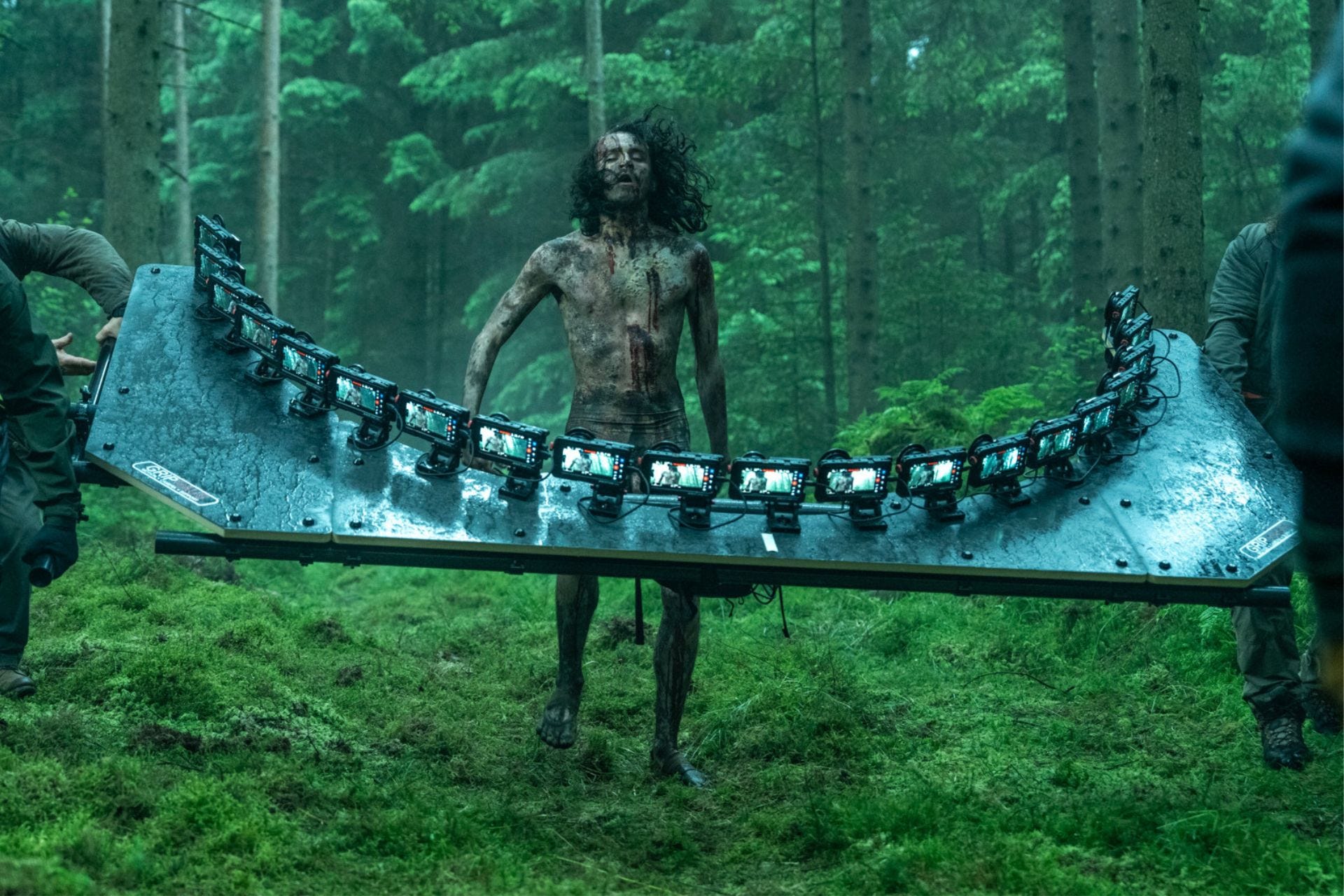
Stylistically, 28 Years Later differs from 28 Weeks Later, which took a more conventional approach. Instead, Years feels like a polished version of 28 Days Later. It features many cut shots interlaced with old film footage, dream sequences and abrupt scene shifts. These elements build a consistent sense of unease and creepiness, especially when depicting the illusion of the village functioning normally. The camerawork is expressive, heightening the tension with swivel shots around characters and chaotic character point-of-view angles during chases. These techniques make the film feel less like a movie and more like a lived experience.
There are some especially expressive scenes, such as when Spike gets his first kill and the camera wraps around the infected, evoking something out of The Matrix. While these glambot shots looked cool, they sometimes felt more like a video game, slightly distracting from the otherwise strong visual style. It is even more impressive to learn that much of the film was shot on an iPhone 15.
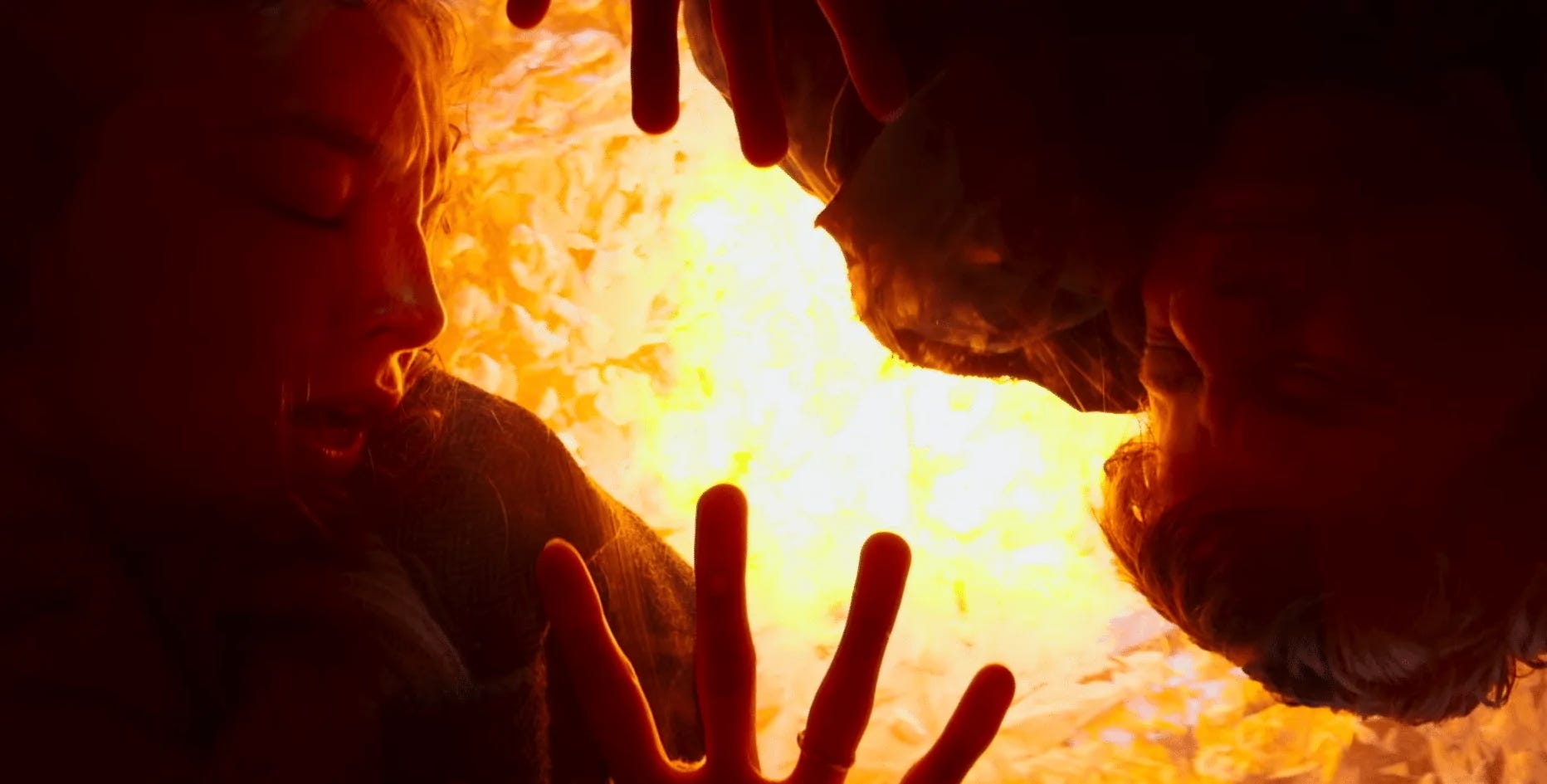
That said, I do have some gripes. The special effects were well below par for a film involving Danny Boyle and Alex Garland. Any scene involving fire looked incredibly fake, like it was thrown together in a studio by some bored animator on his computer. None of it ever looked like actual fire. One scene set in a petrol station, which was filled with benzene, looked laughably unrealistic, cartoonish even, like a green fart cloud you’d see in a Nickelodeon show. Some of the practical effects were equally disappointing. Dodgy births, poorly rendered severed heads and exposed spines all looked a bit cheap, undermining the gritty realism of the rest of the film.
Another weakness is the recycled plot device from 28 Weeks Later, where a child ventures into danger and inadvertently causes catastrophe. Spike, like the siblings in the previous film, sneaks out into the wild world of the infected and guess what, he fucks around and he finds out. It is frustratingly predictable to see the same plot pivot used to generate a story. Still, once Spike breaks out, especially when Ralph Fiennes appears, the story feels more mature and compelling than the earlier films.
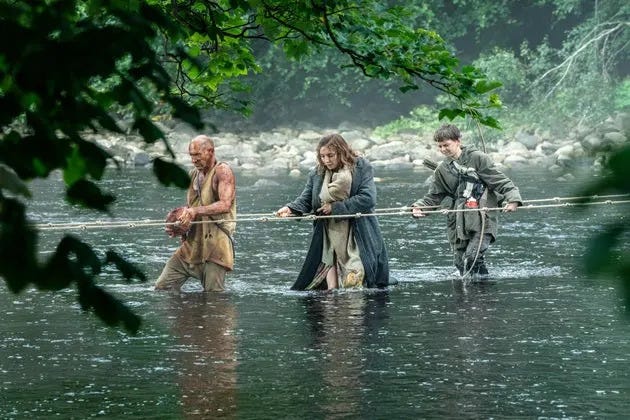
But I do like that they have extended this world into new areas with interesting characters and taken it forward by so many years. I must also say the locations where they shot this film were a work of art in themselves. The film was primarily shot in Northumberland, which was a perfect place to show how modern society has been whittled down to damaged buildings slowly being overtaken by nature. The area was absolutely stunning. There was something so great about having a place of natural beauty set in a place of absolute horror.
28 Years Later holds up in my opinion. It took the story in a new direction, which purposely minimised the threat of zombies and focused more on the human condition, especially how we grapple with the concept of death. Now, while I say it holds up, the final scene of the movie is an absolute abomination to the film industry and, quite frankly, an insult to any fan of the 28 films. I am excited to see more of these movies, but if anyone has Boyle or Garland’s number or email, please let me know. I HAVE SOME THOUGHTS.